
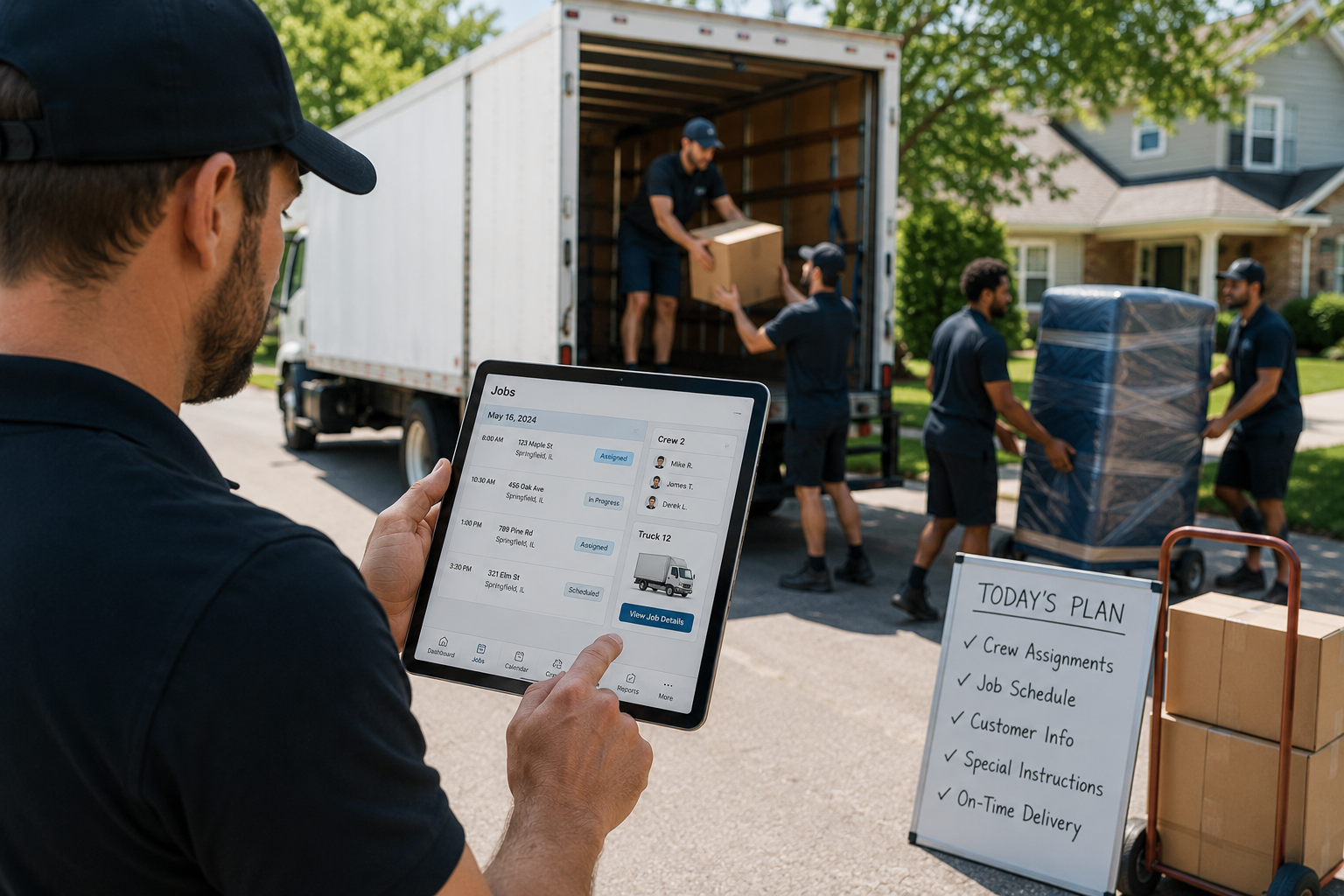
Most moving companies begin with day labor and gradually build a dependable crew as volume grows. Each stage requires different hiring, scheduling, and retention strategies. The key to scaling successfully is creating systems that keep crews organized, productive, and consistently available.
Most moving companies start by hiring day labor for individual jobs and then gradually build a stable crew as volume grows. Each stage changes how you find people, schedule them, and keep them. Day labor offers flexibility when work is unpredictable, while a trained crew provides consistency and better customer experiences. The challenge is that every growth stage creates new operational demands. This guide walks through the progression from day labor to a fully staffed moving crew and explains how to scale your team without scaling the chaos.
Stage 1: Day labor and your first hires
Most moving companies begin with day labor.
In the early stages, work volume is inconsistent. One week may bring three jobs, while the next brings none. Hiring full-time movers often doesn’t make financial sense, so owners rely on family members, friends, gig platforms, labor pools, or workers they know from previous jobs. There is nothing unusual about this approach. Many successful moving companies started exactly the same way. The advantages are obvious. You only pay for labor when you need it. Staffing costs remain flexible, and you can match labor expenses to incoming revenue.
The downside is reliability.
A worker who was available last week may not answer the phone this week. Skill levels vary dramatically. Some workers show up ready to work, while others create more problems than they solve. The operational challenge is that every job becomes a staffing exercise. Before worrying about customers, trucks, or schedules, you first need to figure out who is available.
At this stage, many owners start keeping notes on who performs well and who doesn’t. Those notes eventually become something more valuable: the foundation of a real crew. As your volume increases, another question begins to emerge. How those workers are paid and classified becomes increasingly important, which we’ll cover later in this guide.
Stage 2: Building a repeat crew
Eventually, most movers reach a point where they stop asking, “Who can work today?” and start asking, “Which crew should handle this job?” This is the transition from day labor to a repeat crew. Instead of pulling from a random labor pool, you begin working with the same people regularly. You learn who works efficiently, who handles customers well, and who can be trusted on difficult jobs. A callback list develops naturally. Certain movers become your first call whenever work comes in.
The benefits extend beyond reliability. A repeat crew learns your expectations. Jobs run more smoothly because people understand your processes, equipment, and customer service standards. At the same time, new challenges emerge.
Scheduling becomes more complicated. You need to know who is available, which crew fits a particular move, and whether someone is already assigned elsewhere. Double-booking becomes a risk. Communication also becomes more important. Crews need accurate job details, addresses, schedules, and customer information. This is also the point where retention starts to matter.
Good movers are difficult to replace. When reliable crew members leave, you’re forced back into recruiting and training mode. Many growing moving companies discover that keeping good people is often easier and less expensive than constantly finding new ones.
The employee vs. contractor question
As a moving company grows, questions about worker classification become more important. Many owners start with occasional day labor or independent workers. As those workers become regular crew members, the relationship often changes.
For moving companies, this can become a significant issue because movers often work on company schedules, use company trucks, and follow company procedures. However, classification rules vary by state and involve tax and employment law considerations. Because of that, this is not a decision that should be made based on a blog article. Moving company owners should discuss worker classification questions with a qualified CPA, payroll specialist, or employment attorney familiar with their state’s requirements.
The important takeaway is that staffing growth often creates classification questions, and those questions should be addressed before they become larger problems.
This section provides general information only and should not be considered legal or tax advice.
Stage 3: A real crew and the systems it takes
Once you’re staffing a real crew across multiple jobs per day, the challenge stops being finding people and starts becoming coordinating them. This is where many moving companies hit their next growth ceiling. When you’re managing several trucks, multiple crews, and dozens of weekly jobs, scheduling quickly becomes difficult to track using whiteboards, spreadsheets, group texts, or memory alone.

You need to know who is working, where they are assigned, when they are available, and whether changes have been communicated. You also need visibility into performance. Which crew consistently finishes jobs efficiently? Which movers receive positive customer feedback? Which workers should be prioritized during the busy season? This is the operational side where a moving CRM earns its place.
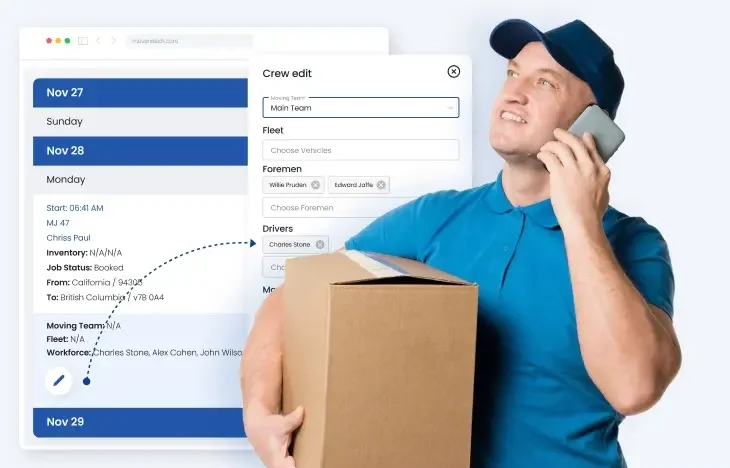
With MoversTech, dispatchers can assign crews to jobs from a centralized schedule, making it easier to see who is assigned where and avoid the double-bookings and scheduling gaps that often occur when managing a growing roster manually. Crews stay connected in the field, accessing job information and updating statuses as work progresses. The office gains visibility into what is happening without relying on a constant stream of calls and text messages. Because every job includes assignment and completion records, moving companies also begin building valuable performance history. Over time, those records make it easier to identify top performers, build stronger crews, and make smarter staffing decisions.
The goal is not more software. The goal is to make sure the right people are in the right place with the right information, so growth remains manageable. As your company scales, systems become just as important as staffing.
Keeping good crews
Finding good movers is difficult. Keeping them is even more important. Turnover creates direct costs through recruiting, onboarding, training, and lost productivity. Every experienced crew member who leaves takes valuable knowledge with them.
Many movers focus heavily on hiring and very little on retention. In practice, the factors that keep movers around are usually straightforward.
- Predictable schedules matter.
- Fair pay matters.
- Getting paid on time matters.
- Clear expectations matter.
- People also want consistency.
Few things frustrate crew members more than last-minute schedule changes, poor communication, or constantly being unsure whether work will be available.
Stable crews produce better customer experiences. They generate fewer claims, fewer mistakes, and stronger reviews. Retention is not just an HR issue. It directly impacts operational efficiency, profitability, and customer satisfaction. Companies that keep good crews often outperform competitors that constantly replace them.

Build the crew before you need it
Most moving companies don’t jump from day labor to a fully staffed operation overnight. Growth happens in stages. You start by finding reliable workers. Then you build a repeat crew. Eventually, you develop the systems needed to coordinate multiple crews across multiple jobs without losing visibility or control.
The companies that scale successfully are usually the ones that prepare for the next stage before they are forced into it. They document processes, improve scheduling, track performance, and focus on keeping good people once they find them. A great crew can become one of your biggest competitive advantages. The challenge is creating the systems that allow that crew to grow alongside the business.
Want to simplify crew scheduling, dispatching, and field communication as your company grows? Book a Demo to see how MoversTech helps moving companies coordinate crews more efficiently.
Frequently Asked Questions
How do moving companies find crew members?

Most movers find workers through referrals, existing employees, industry contacts, local labor pools, job boards, and word-of-mouth recommendations. Many companies start with day labor and gradually build a roster of reliable movers.
When should a moving company stop using day labor and build a crew?
Most movers begin building a regular crew once they have enough consistent work to provide reliable hours. The transition typically occurs when staffing every job individually becomes more difficult than managing a repeat team.
How can a CRM help manage moving crews?
A CRM gives dispatchers a centralized view of jobs, crew assignments, and schedules. This makes it easier to coordinate movers, avoid scheduling conflicts, and keep everyone working from the same information.
When should a moving company invest in crew management software?
Many movers start looking for crew management tools when they begin running multiple crews or multiple jobs per day. This is often the point where manual scheduling methods start creating operational bottlenecks.
